
Where Can You See Tree-Climbing Lions in Uganda?
Uganda, famously known as the “Pearl of Africa,” is a land of breathtaking landscapes, diverse wildlife, and unforgettable adventures. Among its many wonders, one rare and fascinating phenomenon stands out—the tree-climbing lions. Unlike their counterparts in other parts of Africa, these lions have developed a unique behavior of climbing and resting in trees, offering wildlife enthusiasts a rare and thrilling sight.
If you’re seeking inspiration, adventure, and a connection with nature’s marvels, then witnessing tree-climbing lions in Uganda should be at the top of your bucket list. This article explores where you can find these majestic creatures, why they climb trees, and how this extraordinary experience can leave you inspired and in awe of nature’s wonders.
The Mystery of Tree-Climbing Lions
Lions are traditionally known as ground-dwelling predators, ruling the savannah with strength and pride. However, in a few select locations, including Uganda, some lions defy the norm by scaling trees with surprising agility. Scientists believe several factors contribute to this rare behavior:
-
Escape from Ground Heat – The scorching African sun can make the ground unbearably hot. Climbing trees allows lions to rest in the shade and catch cool breezes.
-
Avoiding Insect Bites – Staying above ground helps them avoid bothersome insects, especially during the wet season.
-
Better Vantage Point – From the trees, lions can survey the landscape for prey or potential threats.
-
Unique Adaptation – Some experts suggest that tree-climbing lions in Uganda have developed this trait due to their specific habitat conditions.
Whatever the reason, watching these powerful cats lounging on tree branches is a surreal and unforgettable experience.
Where to Find Tree-Climbing Lions in Uganda
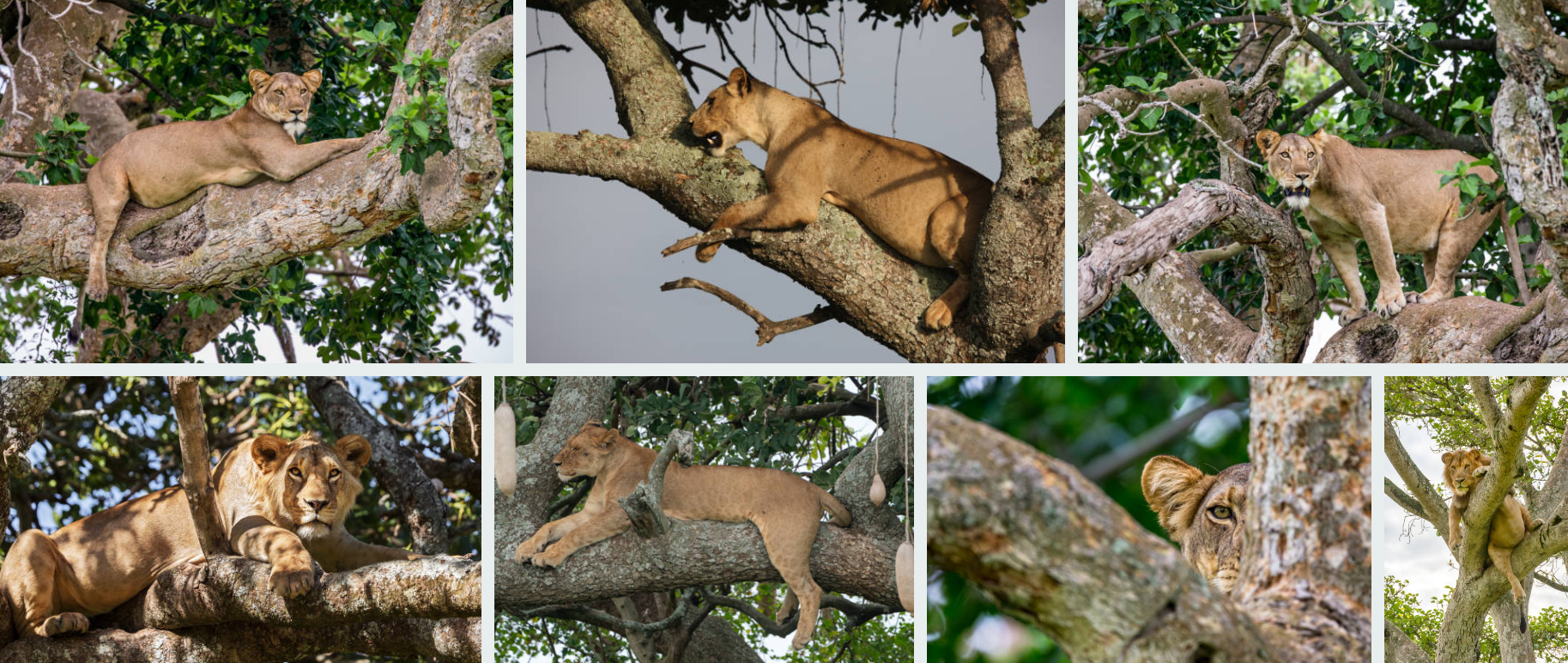
While lions are found in several Ugandan national parks, tree-climbing lions are primarily seen in two key locations:
1. Ishasha Sector – Queen Elizabeth National Park
The Ishasha sector in Queen Elizabeth National Park is world-famous for its tree-climbing lions. Located in the southwestern part of Uganda, this remote and scenic region is home to a pride of lions that frequently rest in the branches of large fig trees.
Why Ishasha?
-
The open savannah dotted with fig and acacia trees provides the perfect environment for lions to climb.
-
The area is less crowded than other parks, offering a more intimate wildlife experience.
-
Visitors often spot lions lounging in trees during the heat of the day, making mid-morning and early afternoon the best viewing times.
How to Get There
-
Ishasha is accessible by road from Kampala (about 6-7 hours) or by a short flight to Kihihi airstrip.
-
Game drives through the sector are the best way to encounter these incredible lions.
2. Lake Manyara National Park (Tanzania) – A Bonus Mention
While Uganda’s Ishasha is the prime location for tree-climbing lions, neighboring Tanzania’s Lake Manyara National Park also hosts similar behavior. If you’re planning an extended East African safari, this makes for an excellent addition to your itinerary.
The Inspirational Lessons from Tree-Climbing Lions
Beyond the sheer thrill of seeing lions in trees, this phenomenon carries deeper, inspirational lessons that resonate with life, resilience, and adaptability.
1. Defying Expectations
Lions are not “supposed” to climb trees, yet these big cats have adapted in ways that defy conventional wisdom. Similarly, in life, we often face limitations imposed by society or self-doubt. The tree-climbing lions remind us that breaking norms and embracing uniqueness can lead to extraordinary outcomes.
2. Adapting to Challenges
The lions climb trees to escape heat, insects, and competition—showing how adaptation is key to survival. In our own lives, challenges will arise, but flexibility and innovation can turn obstacles into advantages.
3. The Power of Perspective
By climbing trees, lions gain a new vantage point. This teaches us that sometimes, rising above our usual perspective can reveal new opportunities and solutions we wouldn’t see from the ground.
4. Resilience and Strength
Scaling a tree is no easy feat for a lion, yet they do it with determination. Their resilience mirrors the strength we must cultivate to overcome life’s hurdles.
Planning Your Safari to See Tree-Climbing Lions
If you’re inspired to witness this marvel of nature, here’s how to plan your trip:
Best Time to Visit
-
Dry Seasons (June-August & December-February) – Wildlife viewing is easier as animals gather around water sources.
-
Early Morning & Late Afternoon – Lions are more active, though tree-climbing is common during midday heat.
Safari Tips
-
Book a Knowledgeable Guide – Local guides know the lions’ favorite trees and increase your chances of sightings.
-
Bring Binoculars & a Good Camera – Capture the moment when a lion gazes down from a tree.
-
Stay Patient – Wildlife viewing requires patience, but the reward is worth it.
Where to Stay
-
Ishasha Wilderness Camp – A luxury tented camp offering close encounters with nature.
-
Enjojo Lodge – A mid-range option with stunning views of the savannah.
A Call to Adventure
Seeing tree-climbing lions in Uganda is more than just a wildlife encounter—it’s a reminder of nature’s endless wonders and the lessons it offers. These lions symbolize resilience, adaptability, and the courage to stand out.
If you’ve ever felt stuck in life or in need of inspiration, let the tree-climbing lions be your motivation. Just as they rise above the ordinary, so too can you climb beyond limitations and embrace your unique path.
So pack your bags, set your sights on Uganda, and prepare for an adventure that will leave you awestruck and inspired. The tree-climbing lions are waiting—will you answer the call?
