
Bigodi Wetland Walk: Wildlife, Birds and Community Experience
A Bigodi wetland walk is a guided nature experience near Kibale National Park in western Uganda. It suits travellers who want to look for birds, watch for monkeys and explore a wetland landscape at a slower pace. It can also add a community perspective to a trip focused on Uganda’s forests and wildlife.
Bigodi is a useful addition to a Kibale itinerary, but it is not a substitute for chimpanzee trekking. The wetland walk has a different setting and purpose, with more attention to birds, plants and the surrounding community. Wildlife sightings depend on conditions and cannot be guaranteed. Before booking, confirm the route, expected duration, current fee and exactly which activities are included.
Where is Bigodi, and how does it fit into a trip?
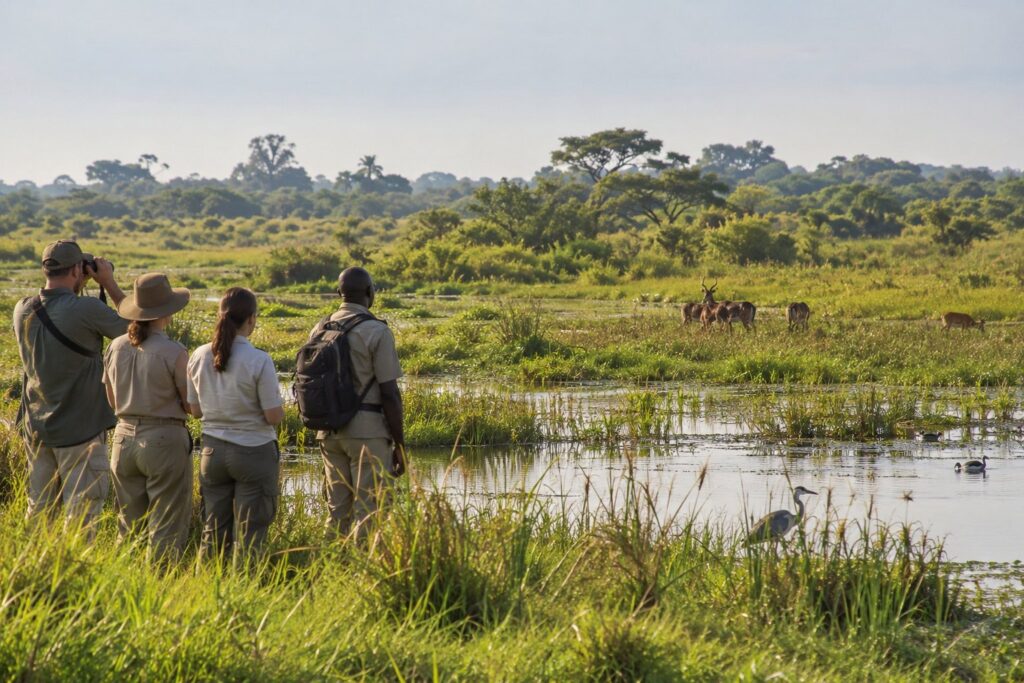
Bigodi is near Kibale National Park, in the wider Fort Portal area of western Uganda. Its location makes it a practical option for travellers already staying near the forest. Rather than making a separate long-distance journey just for the walk, consider including it during your time in the Kibale area.
You can plan it alongside chimpanzee trekking, either on a separate day or around a confirmed trekking schedule. A separate day leaves more room for birdwatching, photography and rest. If you combine both activities in one day, allow for transfers, meals and the possibility that your forest activity may finish later than expected.
For a longer journey, Bigodi can form part of a broader Uganda safari itinerary. Ask your trip organiser to check the transfer from your actual accommodation rather than relying on a general travel time for the Kibale area.
What to expect on the wetland walk
The walk focuses on the wetland and its edges. A guide helps you search the vegetation, listen for bird calls and notice details that are easy to miss when walking alone. Expect pauses for observation rather than a continuous fitness walk.
Your experience will depend on the route, weather and your interests. Tell the guide whether you are most interested in birds, general wildlife, plants or photography. This helps set a suitable pace without creating an expectation of particular sightings.
Birdwatching
Birds are a main reason to visit Bigodi. The great blue turaco is one of the species associated with the area, but no individual species should be treated as a promised sighting. Some birds may be easier to hear than see, while others appear briefly through dense leaves.
Binoculars make a significant difference. Even if you are not an experienced birder, they help you see colour, movement and behaviour more clearly. Let the guide know your experience level so that explanations remain useful and easy to follow.
Monkeys and other wildlife
Monkeys may be seen in the vegetation around the wetland. Keep looking above the path as well as ahead, and give animals space if they come close. Do not feed them or try to attract their attention.
Bigodi is not the place to book if your main goal is a guided chimpanzee encounter. Arrange that separately through the appropriate chimpanzee trekking activity. Treat any wildlife seen during the wetland walk as part of a wider nature experience, not a checklist that must be completed.
Community experiences
Bigodi also offers a chance to learn about life around the wetland. However, do not assume that every nature-walk booking includes a village visit or other community activity. Ask what is offered, who leads it and whether it requires a separate booking or payment.
Choose activities that fit your interests and available time. Ask permission before photographing people, homes or workspaces. A respectful conversation is more valuable than treating daily life as a photo opportunity.
When to go
Rain is possible throughout the year in the Kibale area. Wetter conditions can make paths muddy or slippery, while drier spells may make walking more comfortable. Seasonal labels are not a guarantee of conditions on the day, so check the local forecast and ask about the state of the route.
An early start is often useful for birdwatching. If you prefer a later walk, discuss the likely conditions with the guide before settling on a time. Build some flexibility into your schedule rather than fitting the activity tightly between transfers.
After heavy rain, ask whether any part of the usual route has changed. Footwear and balance may matter more than distance when a path is wet.
Booking, costs and transport
Confirm current arrangements with the local activity organiser or your tour operator before travelling. Do not assume that a Kibale chimpanzee permit also covers the Bigodi wetland walk. Ask for a clear description of what you are booking.
- Fees: Check the current price, payment method and any separate charges for community activities.
- Guiding: Confirm that a guide is included and explain any particular birdwatching interests.
- Timing: Ask for the meeting time, expected duration and latest practical start.
- Route: Check the distance, terrain and options for shortening the walk.
- Transport: Confirm the meeting point and whether pickup and return transfers are included.
If you are arranging your own transport, agree on the return journey before starting. Mobile contact and pickup arrangements are worth settling in advance, especially when you have another activity or onward transfer that day.
What to wear and bring
Pack for damp ground, changing weather and time spent standing still to watch wildlife. You do not need specialist birdwatching equipment to enjoy the walk, but a few practical items help.
- Closed walking shoes: Choose footwear with a reliable grip that you do not mind getting muddy.
- Long trousers and a light long-sleeved top: These offer useful coverage against vegetation and insects.
- Rain protection: Carry a lightweight waterproof layer and protect your phone or camera.
- Drinking water: Bring enough for the outing, particularly if you are combining activities.
- Binoculars: These are especially helpful for birds partly hidden in foliage.
- Insect repellent and sun protection: Use them according to the product instructions.
For photography, expect branches, shade and moving subjects. A longer lens can help, but keep equipment manageable on uneven ground. Follow the guide’s instructions, stay on the agreed route and avoid disturbing wildlife for a clearer picture.
Is the walk suitable for families?
Suitability depends on the children’s ages, interest in nature and comfort with muddy or uneven paths. Birdwatching involves waiting and listening, which some children enjoy more than others. Ask about the route before booking rather than assuming it will be a short, easy stroll.
Travellers with mobility needs should discuss access in detail. Ask about steps, narrow sections, slippery surfaces and resting opportunities. A general description such as “gentle walk” is not enough to judge whether a particular route will work for you.
Frequently asked questions
How long does a Bigodi wetland walk take?
The duration depends on the booked route, walking pace and time spent watching birds. Ask the organiser for the expected length of your specific outing, and leave room for transfers and weather-related changes.
Can I combine Bigodi with chimpanzee trekking?
Yes, it can fit into the same Kibale stay. Combining both on one day requires careful scheduling because trekking duration and return times can vary. Confirm your trekking arrangements first and avoid a tight connection.
Will I definitely see birds and monkeys?
No particular sighting is guaranteed. A guide can help you find and identify wildlife, but weather, animal movement and visibility all affect what you see.
Is a community visit included?
Not necessarily. Confirm whether your booking covers only the wetland walk or also includes a community activity. Ask about any additional time or cost before agreeing to the itinerary.
Is Bigodi worthwhile if I am not a birder?
It can be a good choice if you enjoy guided walks, plants and observing a different habitat. Tell the guide you prefer a general nature experience rather than a specialist birdwatching outing.