
Chimpanzee Habituation in Kibale: What to Expect
Chimpanzee habituation in Kibale is an extended, guided forest experience for travellers who want more time to observe wild chimpanzees than a standard trek usually allows. Expect an early start, uneven trails, periods of waiting and potentially several hours of walking. The chimpanzees determine the pace, so sightings and the amount of clear viewing time cannot be guaranteed.
The experience takes place in Uganda’s Kibale National Park. It offers the chance to observe behaviour such as feeding, grooming, resting and moving through the forest, while learning about the gradual process of getting chimpanzees accustomed to human observers. Before booking, confirm the current activity format, permit conditions and reporting time with the Uganda Wildlife Authority or your booking operator.
What is chimpanzee habituation?
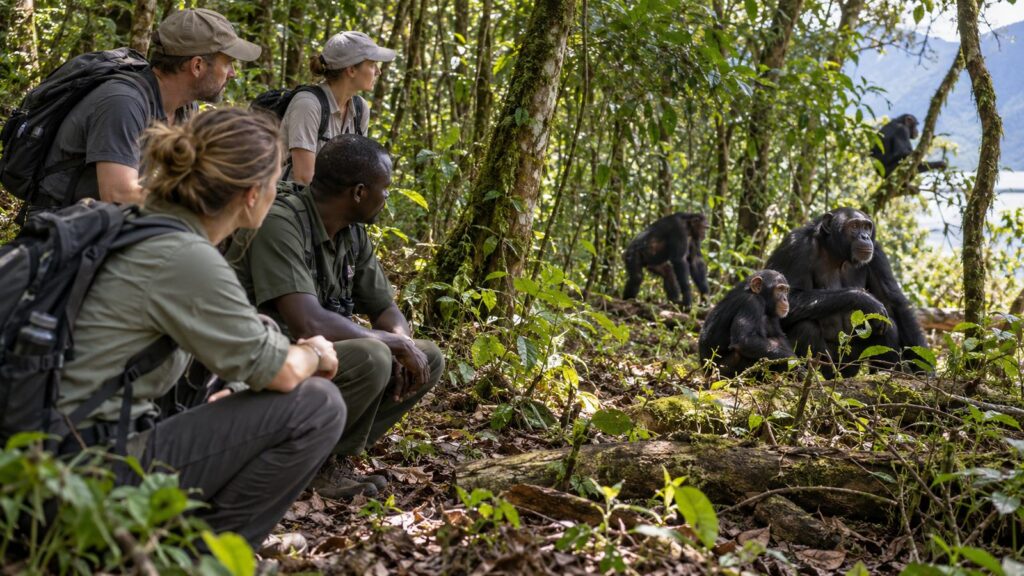
Habituation is the gradual process through which wild animals become accustomed to the presence of people without being fed, touched or trained. It takes repeated, carefully managed encounters. The chimpanzees remain wild, and visitors must follow the instructions of the park team throughout the activity.
As a visitor, your role is to observe. You are not there to approach chimpanzees independently, attract their attention or interact with them. Depending on the day’s arrangements, your guides may explain the animals’ behaviour and the work involved in monitoring them.
A longer visit does not necessarily mean closer or easier sightings. Chimpanzees may stay high in the canopy, move quickly through thick vegetation or rest where visibility is poor.
Habituation versus a standard chimpanzee trek
The main difference is the time commitment and style of the visit. A standard trek usually includes a search followed by a limited viewing period once chimpanzees are located. Habituation is generally planned as a longer experience, often taking much of the day.
| Planning point | Standard chimpanzee trekking | Chimpanzee habituation |
|---|---|---|
| Time commitment | A shorter activity, although the search time varies | A longer forest visit; confirm the current schedule when booking |
| Main emphasis | Finding and observing chimpanzees during an allocated viewing period | Spending longer following and observing chimpanzee activity |
| Physical demands | Variable walking on forest trails | Potentially more walking, standing and waiting |
| Best suited to | Travellers who prefer a shorter wildlife activity | Travellers comfortable with a less predictable day in the forest |
Neither option guarantees a particular sighting. If you are still choosing between them, our chimpanzee trekking guide provides a useful starting point.
What happens during the day?
Reporting and briefing
Plan to arrive at the reporting point before your confirmed start time. Do not assume that your accommodation is beside the meeting point: ask your operator to check the transfer route and departure time in advance.
The briefing covers conduct around chimpanzees and instructions for moving through the forest. Listen carefully, even if you have taken part in other primate activities. Current park instructions take priority over advice you have read elsewhere.
Searching and following
The team may use calls, recent signs and knowledge of chimpanzee movements to guide the search. You might walk steadily for a while, pause to listen, then change direction. Some stretches can be muddy, tangled or slippery.
Once chimpanzees are found, the experience may alternate between quiet observation and walking to keep up with them. There can also be long periods when little appears to happen. Patience is part of the activity, rather than a sign that anything has gone wrong.
Returning from the forest
The finish depends on the booked activity, park instructions and conditions that day. Avoid arranging a tight onward connection immediately afterwards. Leave room to return to your accommodation, clean up and rest before another substantial journey.
How long does the experience last?
Habituation in Kibale is commonly described as a full-day experience, in contrast to a standard trek. However, do not treat that description as a promise of continuous chimpanzee viewing from morning to evening.
Your time includes the briefing, searching, walking, observation and the return journey through the forest. Weather, chimpanzee movements and operational decisions can affect the day. Ask for the expected reporting and finishing times, and confirm whether the option you are booking is a full-day activity.
Permits, costs and booking checks
Arrange the correct permit before building the rest of your itinerary around the activity. A standard chimpanzee trekking permit should not be assumed to cover habituation.
Fees and booking conditions can change, so check current information with the Uganda Wildlife Authority or ask your operator for a written breakdown. This article does not quote a permit price because it needs to be verified for your travel date and visitor category.
- Confirm that the booking is specifically for chimpanzee habituation in Kibale.
- Check the date, reporting point and start time.
- Ask what the quoted cost includes, particularly transport, meals and accommodation.
- Confirm the minimum age, identification requirements and health guidance.
- Read the cancellation and date-change conditions before paying.
When to go and where to stay
Kibale can receive rain throughout the year. The generally drier periods, often around December to February and June to September, may offer less muddy walking conditions. These are seasonal patterns, not weather guarantees.
Rain can make trails slippery, while dense vegetation can restrict visibility in any month. Choose your dates around your wider itinerary and tolerance for wet conditions rather than expecting a particular season to guarantee better sightings.
Many travellers approach Kibale through the Fort Portal area and stay near the park. Kanyanchu is an important visitor hub for chimpanzee activities, but confirm your exact meeting point before choosing accommodation.
Check the actual drive from your lodge to that meeting point, not simply whether the property is advertised as being near Kibale. Road conditions and the location of your accommodation affect transfer times. Arriving in the area the previous day is a practical way to reduce pressure before an early start.
If Kibale is part of a longer trip, allow realistic space between activities. Explore our Uganda safari planning options when considering how to fit the forest visit into a wider route.
What to wear and pack
Pack for a damp forest day rather than a short walk on a smooth path. Keep your bag light enough to carry comfortably for several hours.
- Footwear: Wear broken-in walking boots or sturdy shoes with good grip.
- Clothing: Choose long trousers and a lightweight long-sleeved top for protection from vegetation and insects.
- Rain protection: Carry a waterproof layer and protect your phone, camera and documents.
- Water and food: Confirm what to bring and where eating is permitted. Do not eat near chimpanzees.
- Personal essentials: Bring any required medication and suitable insect repellent.
- Camera equipment: A manageable camera setup is more useful than heavy equipment that slows you down.
Fitness, health and responsible viewing
You do not need to be an athlete, but you should be comfortable with prolonged walking and standing on uneven ground. Discuss mobility concerns with your operator before buying a permit. The distance and difficulty depend partly on where the chimpanzees move.
Follow the required viewing distance and never move closer for a photograph. Keep voices low, do not feed or touch wildlife, and avoid flash photography. If chimpanzees approach or cross your route, follow your guide’s directions.
Tell the park team if you feel unwell, particularly if you have respiratory symptoms. Chimpanzees are susceptible to some human infections. Ask about current health precautions before travelling, and do not hide symptoms to avoid missing the activity.
Frequently asked questions
Are chimpanzee sightings guaranteed?
No. These are wild animals moving freely through the forest. A longer experience provides more time to search and observe, but it cannot guarantee a sighting or clear photographs.
Is habituation better than trekking?
It depends on your priorities. Habituation may suit patient travellers interested in behaviour and a longer forest day. A standard trek may be a better fit if you prefer a shorter activity.
Can children take part?
Age restrictions apply to chimpanzee activities. Confirm the current minimum age for the specific experience before booking a family trip. Also consider whether an eligible child would enjoy extended walking and quiet waiting.
Can I book it after arriving in Kibale?
Do not rely on last-minute availability. Check permits before travelling, particularly if your dates are fixed. Confirm the activity in writing rather than assuming you can upgrade a standard trek on arrival.