Group Safari Packing and Health Preparation: What to Sort Before You Travel
Most packing advice assumes one traveller and one suitcase. On a group safari the maths is different. You share a vehicle for long stretches, you move between game drives, walking days and cultural visits, and the people around you are carrying their own camera bags, water bottles and layers. What works for a solo traveller can become awkward for a group of six.
This guide covers the practical side of getting ready together: what belongs on a group safari packing list, which health questions to raise early, and how to keep luggage sensible when several people are sharing the same 4×4. It is written for the kind of travel Pillars of Africa Safaris arranges, with small groups of roughly 2–12 travellers on tailor-made routes across Tanzania, Uganda, Rwanda and Kenya, guided by local men and women.
Nothing here replaces advice from your own doctor or travel clinic, and nothing replaces confirming the details of your specific itinerary with whoever is arranging it. Use this as a checklist for the conversations you should be having before you fly.
TopicPractical trip planning
Reader focusInformational — travellers preparing for a group safari want a practical packing list and clear guidance on health preparation before departure
Main subjectgroup safari packing list
Start With the Route, Not the Suitcase
A single East Africa trip can move through very different conditions. A Tanzania journey might combine the Serengeti and Ngorongoro Crater with a coastal finish in Zanzibar, Saadani or Mafia Island. A Uganda or Rwanda trip might pair gorilla trekking in Bwindi, Mgahinga or Volcanoes National Park with time in Kampala, Kigali or beside Lake Kivu. Kenya adds Nairobi National Park and the Maasai Mara.
Then there is the question of activities. Some groups build in Kilimanjaro foothill day hikes, walking or cycling days, coffee and community visits, or beach time at the end. Each one changes what you need in your bag.
So the first packing question is not “what should I bring?” It is “what does our route actually ask of us?” If you are still working out how the trip will run, our guide to how small group safari planning works in East Africa covers the group-size, vehicle and pace questions that come before packing.
The Group Safari Packing List: What Everyone Should Cover
Think in categories rather than items. Once the categories are right, the specifics fall into place.
Clothing that handles more than one climate
- Neutral, quick-drying layers in light colours, which are easier to rinse and less attractive to insects.
- A warm mid-layer or light jacket for cool highland mornings, such as the Ngorongoro Highlands and Karatu area, and for early starts.
- A light rain shell that packs small. Highland rain can arrive without much warning.
- Long trousers and long sleeves for evening drives and for trekking days in dense vegetation.
- A sun hat, sunglasses and something to cover your neck. Dust scarves or buffs are useful on dry, dusty roads.
- Swimwear if your route includes the coast, a lake or a lodge pool.
Footwear and day-to-day comfort
- Walking shoes or light boots that are already broken in. Gorilla trekking days and walking itineraries are not the moment to test new footwear.
- Closed, comfortable shoes for game drives, plus sandals for beach or lodge time.
- A small daypack for water, layers, camera and personal items on activities.
- A refillable water bottle, and a head torch for early departures and power cuts.
Camera, binoculars and power
- A camera bag small enough to sit safely in the vehicle without taking up a seat.
- Spare batteries, extra memory cards and a cloth for dust.
- Binoculars, ideally one pair each. Sharing a single pair across a group of six rarely works out well.
- A power bank and the correct plug adapters for each country on your route. Check the plug types before you leave rather than on arrival.
Documents, medication and small extras
- Copies of your passport, insurance details and itinerary, kept separately from the originals and also saved on your phone.
- Personal medication in hand luggage, with prescription details where relevant.
- Sunscreen, insect repellent and lip balm.
- A small shared first aid kit for the group: plasters, painkillers, rehydration sachets and anything the group uses regularly.
- Tissues, hand sanitiser and a few sealable bags for wet or dusty clothing.
Luggage note: soft-sided bags are easier to fit into a shared 4×4 than hard cases. Aim for one main bag plus a daypack per person, and confirm baggage arrangements with your trip planner once your group size is final.
Gorillas, Coast and Culture: How Packing Changes
The core list stays much the same. These differences are what usually catch groups out.
| Experience | Pack differently | Why it helps |
|---|---|---|
| Gorilla trekking in Uganda or Rwanda | Long trousers, a light rain shell, sturdy broken-in shoes, a compact daypack | Trekking days involve walking through dense vegetation at altitude, and the weather can shift during the day |
| Kilimanjaro foothill day hikes and lower slopes | Layers you can remove, sun protection, a hat, more water than you think you need | Lower-slope days often start cool and warm up quickly |
| Coastal Tanzania: Zanzibar, Mafia, Saadani, Pangani | Light clothing, swimwear, sandals, a dry bag, extra insect repellent | Humidity, sea air and boat trips change what is comfortable |
| Cultural and community visits | A modest layer that covers shoulders and knees, easy to slip on | Respectful dress is appreciated, and it is simpler when the item is already in your daypack. Our Tanzania cultural safari guide covers etiquette in more detail |
| Family and multi-generational groups | Spare children’s clothing, wipes, snacks and something to do on longer drives | Children settle faster when the basics are within reach. See our Kenya family safari planning guide for group pacing |
Health Preparation Before You Join a Group Trip
Health preparation is best done as a group conversation, because one person leaving it late can affect everyone’s planning. Book a travel clinic appointment well ahead of departure so there is time for any course that needs more than one visit.
Questions worth putting to your clinic or doctor:
- Which vaccinations and certificates apply to my nationality and to each country on our route, including Tanzania, Uganda, Rwanda and Kenya?
- What is recommended for malaria prevention for the specific parks, lakes and coastal areas we will visit?
- How should I prepare for walking days at altitude, such as gorilla trekking or highland hikes?
- What can I take for motion sickness on long drives and rough roads?
- Am I up to date on routine vaccinations and boosters?
Two more things that are easy to forget. First, check that your travel insurance covers every activity you have actually booked, including trekking, cycling or walking days, rather than assuming it does. Second, carry a written list of any medication you take, in case you need to replace something along the way.
Luggage, Laundry and Space in a Shared 4×4
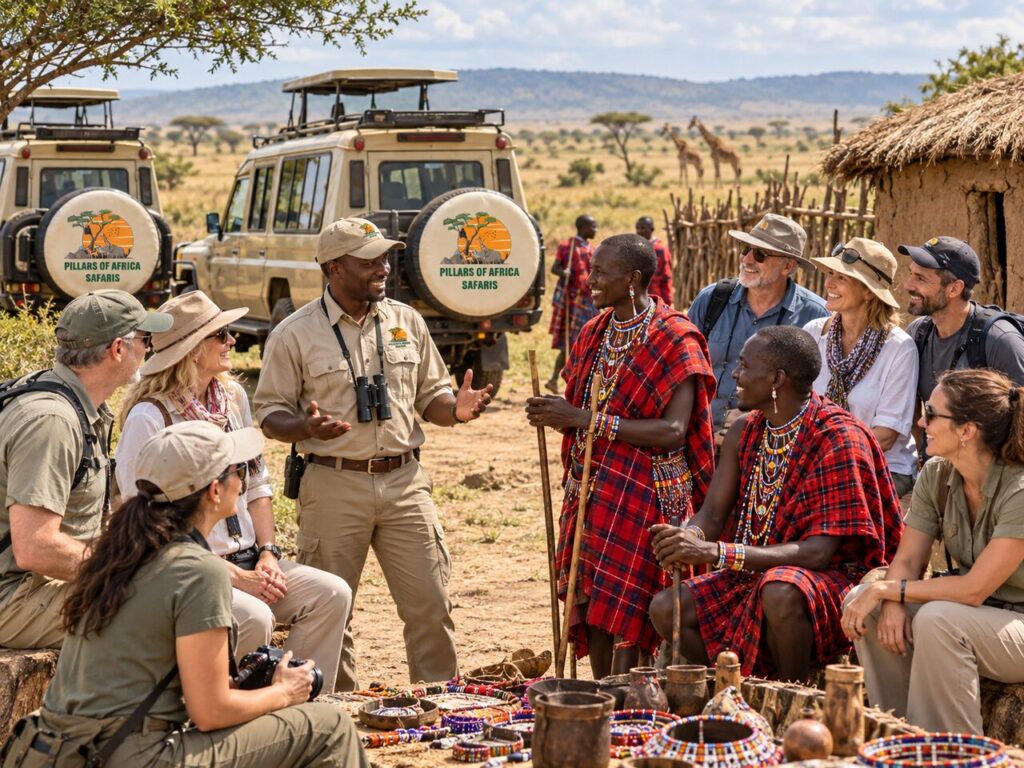
In a small group, vehicle space is a shared resource. Pillars of Africa Safaris uses branded 4×4 safari vehicles, and the practical layout depends on how many travellers are on board and how much luggage the group brings. That is worth discussing early rather than at the airport.
- Ask how luggage is carried when every seat is taken, and whether there are days with domestic flights or a coastal transfer that change the rules.
- Choose soft bags over hard cases, and keep the daypack as your only second item.
- On longer itineraries, quick-drying clothing means less to pack. Many lodges and camps offer a laundry service, though this varies by property, so confirm rather than assume.
- Plan where camera equipment and chargers will live inside the vehicle so nobody is hunting through bags mid-drive.
Decisions Worth Agreeing as a Group Before You Pack
A short conversation before departure prevents most small irritations later.
- Who carries the shared items: first aid kit, spare batteries, a spare memory card, binoculars for anyone who does not own a pair.
- Photography etiquette in communities, including asking before photographing people and accepting a no without pressure.
- How the group wants to handle dress code for cultural visits and religious sites.
- How much rest the group needs, especially with children, older travellers or mixed fitness levels.
- What goes in the daily bag, so nobody is repacking a main case every morning.
How much luggage can I bring on a small group safari?
There is no single figure that suits every route. Space depends on group size, vehicle type and whether your itinerary includes domestic flights or a beach extension. The reliable answer comes from your trip planner, who can confirm seating and storage against your actual itinerary and group size. Mention how many bags each person plans to bring at the enquiry stage.
What should I pack for gorilla trekking in Uganda or Rwanda?
Long trousers, long sleeves, a light rain shell, sturdy broken-in walking shoes and a small daypack cover most trekking days. Neutral colours are practical, and a change of top for afterwards is often welcome. Confirm with your trip planner whether walking sticks or other items are arranged locally, so you are not carrying things you do not need.
When should our group start health preparation?
Earlier than you think. Travel clinics can get busy before peak travel periods, and some courses need several appointments. Aim to have your first appointment booked as soon as your dates are confirmed, and make sure everyone in the group does the same so no one is catching up at the last minute.
Packing is easier once the route is settled. If you would like help shaping a group itinerary across Tanzania, Uganda, Rwanda or Kenya, send your travel dates, group size and the experiences you have in mind through the Plan Your Safari enquiry form. Because routes are tailor-made, your packing and preparation questions can be answered against your real itinerary rather than a generic list.