
A movement in the grass, a call you cannot identify, or an animal pausing before it disappears from view can become the detail you remember most clearly. Wildlife journalling on Uganda safaris gives those moments somewhere to live, through a few words, a rough sketch or a question to revisit later.
This is a self-directed activity you can adapt to your interests, not a specialist service or a task to complete at every sighting. You do not need drawing skills or an extensive knowledge of wildlife. The aim is to notice carefully, enjoy the encounter and keep a personal record without letting the notebook take over.
What wildlife journalling on Uganda safaris involves
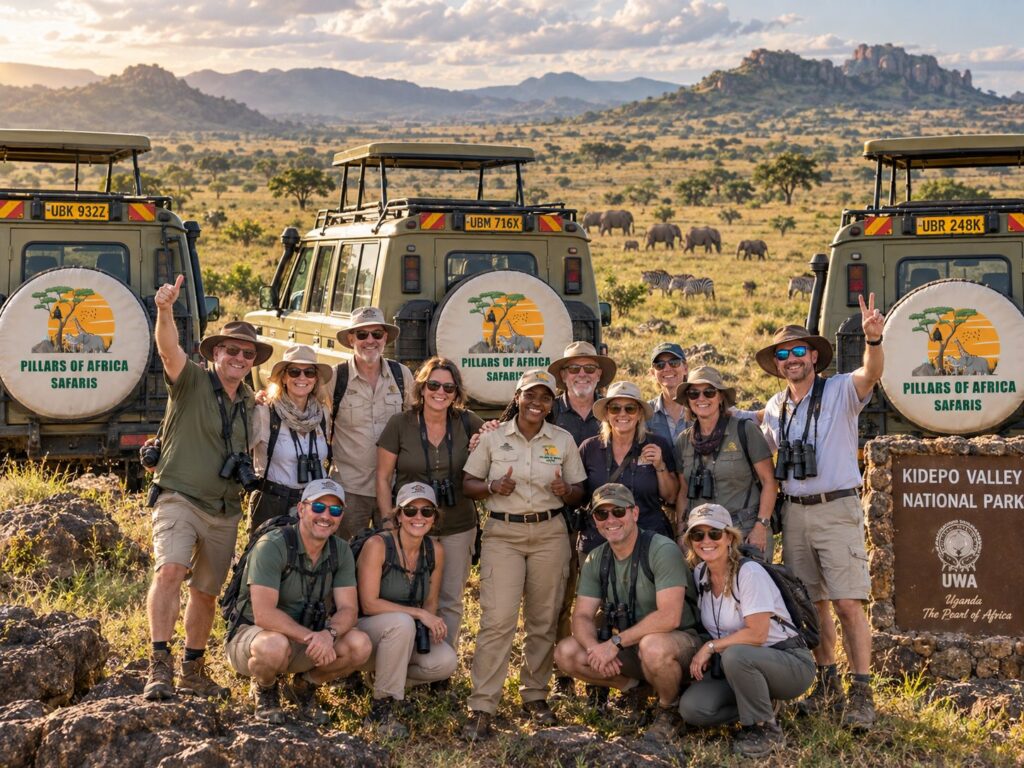
A wildlife journal records what caught your attention and the circumstances in which you noticed it. Unlike a species checklist, it can give as much space to one small action as to an animal’s name. An entry might describe a feeding movement, a change in direction or the sound that first made you look up.
You decide how much structure to use. Some travellers prefer a dated observation log; others combine drawings, short sentences and personal reflections. Both approaches work, provided you can distinguish what you actually observed from ideas or explanations added afterwards.
Begin with one moment, not the whole outing
Trying to document everything can make the activity feel like work. Instead, choose one encounter that held your attention and record a few details after you have watched it. A short, specific entry is often more useful than a long list written hurriedly while the experience continues around you.
What to record during a wildlife encounter
Behaviour you can describe clearly
Start with actions rather than labels. Note whether an animal stood still, walked, fed, turned its head or moved out of sight. If several animals were visible, describe their positions or movements without assuming how they were related.
For example, an imagined entry might read, “One animal stopped feeding and faced the track; the others continued moving.” That preserves an observable sequence. Writing “the lookout warned the family” would introduce a role and relationship you may not have established.
Surroundings and memorable details
Add a few details that place the encounter in its setting. You might notice the height of the grass, shade beneath trees, a patch of open ground or the sound of leaves moving. Include only what was visible or audible from your permitted viewing position.
Personal responses belong in the journal too. You might remember feeling surprised by how quietly an animal moved, or realising that you had overlooked something until another traveller pointed it out. Mark these as your impressions rather than facts about the animal.
Describe the habitat without guessing
Habitat notes can make entries richer without requiring technical ecological knowledge. Plain descriptions such as “short grass beside taller vegetation” or “branches obscured much of the view” are useful. They explain the conditions of your observation without naming a plant or habitat you cannot identify confidently.
Avoid turning a single observation into a broad explanation. Seeing an animal near water does not establish why it was there, and seeing little activity does not prove an area holds little wildlife. Record the limits of your view as carefully as the things you saw.
Use a separate space for questions
Questions help you remain curious without filling gaps with guesses. You could write, “Was it feeding on the leaves?” or “Did the sound come from the animal I was watching?” Ask your guide when there is a suitable opportunity, rather than interrupting instructions or a quiet encounter.
If someone offers an identification or explanation, note its source. “Guide identified this as…” keeps that information separate from your own description. If the question remains unresolved, leaving it open is more accurate than adding a confident answer later.
Separate observation, interpretation and memory
A simple three-part entry helps keep a journal honest: what you saw, what you wondered and what you felt. These categories do not need separate pages. Small labels or a line between sections can be enough.
- Observed: visible actions, sounds, surroundings and the sequence of events.
- Possible explanation: an interpretation to check, not an established fact.
- Personal response: the detail that surprised, amused or moved you.
Be equally careful with measurements. If you did not check a time or count every visible animal, use words such as “briefly”, “several” or “approximately”. Precision is useful only when it reflects what you know.
Choose a journal format that suits you
Short notes for quick recall
A few keywords can preserve a moment until you have time to expand it. Record the date, the location as confirmed to you, one action and one surrounding detail. Leave a question mark beside uncertain names rather than stopping the outing to resolve every identification.
Sketches that help you notice
A sketch does not need to resemble a finished wildlife illustration. A body outline, the direction of a head or a few marks showing where animals stood can clarify something that is awkward to describe. Add arrows or short labels if they help explain movement.
Draw from the view available to you, without seeking a closer position for a better angle. An incomplete sketch can accurately reflect an incomplete view. Hidden legs or an obscured face do not need to be reconstructed from imagination.
A repeatable observation log
If you enjoy structure, use the same headings for each entry. This makes it easier to compare what interested you across different outings without creating a competition for more sightings. Keep the template short enough to complete comfortably.
| Entry element | What to record | Accuracy check |
|---|---|---|
| Context | Date and confirmed location | Leave uncertain details blank |
| Subject | Name or visible features | Mark unconfirmed identifications |
| Behaviour | Actions and their sequence | Avoid assigning motives |
| Setting | Vegetation, light and sounds | Describe rather than diagnose |
| Follow-up | Questions and later explanations | Record who supplied the information |
Fit writing around the experience
Watch first and write when it feels appropriate. An interesting movement may last only briefly, while a note can often wait until a safe pause. There is no need to divide every encounter between watching, photographing and writing.
If you use binoculars, lower them before reaching for your notebook and keep your belongings organised. The guide to choosing binoculars for your safari offers a related starting point when considering your viewing equipment. Journalling itself can remain as simple as paper and a pencil.
Expand notes after the outing
At a suitable break, turn your keywords into a few sentences while the details are still accessible. Add context you remember, but do not make the account more certain simply because it now reads more smoothly. If an entry was written later, noting that helps explain any gaps.
You can also match an entry to one of your own photographs, if you took any. A photo reference may help you revisit a visible feature later, but it need not replace your description of the sound, movement or atmosphere you experienced.
Keep observation respectful and safe
Journalling should never change the boundaries of a wildlife encounter. Follow your guide’s instructions and the rules of the place you are visiting, including any directions about movement, noise, photography or belongings. Put the notebook away immediately when you need to listen or move.
Do not approach, call to, feed or otherwise try to influence an animal for a clearer observation. Avoid asking others to reposition themselves solely to improve your sketch. The record should reflect the encounter as it happened, not an encounter arranged for the page.
Consider fellow travellers
Keep questions and commentary considerate of people sharing the experience. Quiet writing may suit a pause, while spoken notes or repeated identification discussions may distract others. Ask before recording another person’s voice or including identifiable personal details in a journal you intend to share.
Prepare without overpacking
Choose a notebook you can handle comfortably and a writing tool you already enjoy using. A simple protective cover or bag may help keep paper together when it is not in use. Test your arrangement before travelling so you are not learning how to manage it during a sighting.
Digital notes are another option, but do not assume charging will be available whenever you want it. If your journal depends on a device, review the questions in Can You Charge Devices on Safari? and confirm arrangements for your particular trip. A paper backup can keep the activity independent of a battery.
Bring home a record that feels personal
After your safari, read through the journal before polishing it. Keep unanswered questions, imperfect sketches and entries about quiet moments; they show what genuinely held your attention. If you add researched information later, label it as a later addition rather than blending it into the original observation.
When enquiring about a Uganda safari, mention whether you enjoy patient wildlife watching, sketching or keeping observation notes. Sharing those interests gives the conversation a useful starting point. Ask how your preferences might fit the proposed trip, and confirm any requirements rather than assuming that journalling equipment or specialist instruction is included.
TopicUganda safari activities and wildlife observation
Reader focusDiscover a self-directed safari activity for recording wildlife observations, rather than finding an itinerary or booking a specialist service.
Main subjectwildlife journalling on Uganda safaris