
Uganda Safari Pacing: Fewer Moves, More Time to Explore
Good Uganda safari pacing means choosing overnight stops around the experiences you value, rather than adding as many parks as possible. Before approving an itinerary, check how often you change accommodation, which activities share a day with a transfer, and whether you have any uncommitted time between demanding outings.
Why Uganda safari pacing matters
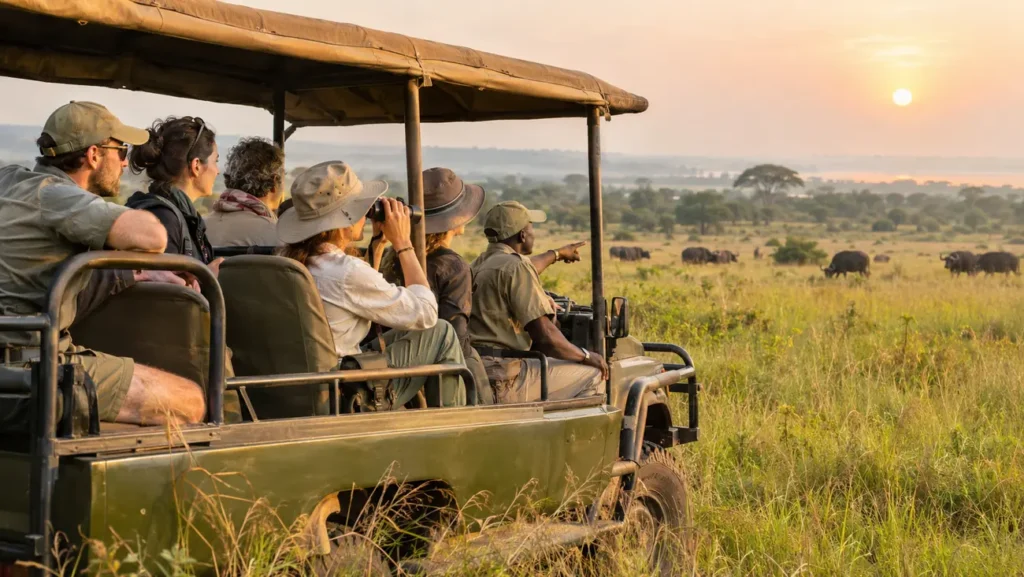
A route can look manageable on a map yet feel busy in practice. Packing, checking out, loading luggage, stopping for meals and settling into the next property all take time beyond the journey itself. A succession of one-night stays can leave little room to enjoy the places you travelled to see.
Forest activities and vehicle-based wildlife viewing also place different demands on travellers. A chimpanzee or gorilla trek involves walking, while a game drive involves extended sitting and concentration. Alternating them may provide variety, but it does not automatically create a restful schedule.
The most useful question is not simply how many days your safari lasts. It is how much of each day remains available for the experience that brought you there.
Start with your essential experiences
Choose two or three priorities before comparing routes. These might be gorilla trekking in Bwindi, chimpanzee tracking in Kibale, or wildlife viewing in Queen Elizabeth National Park. Murchison Falls may be a priority for travellers interested in combining wildlife drives with the Nile landscape.
These are possible building blocks, not a recommendation to include all four. Ask your safari planner to show what each additional destination changes elsewhere in the trip.
- Identify the main reason for travelling: protect enough space around that experience.
- Separate essentials from preferences: an appealing extra should not undermine your highest priority.
- Describe your preferred rhythm: explain whether you enjoy full days or need regular downtime.
- Flag practical needs: mention discomfort during prolonged sitting, walking concerns or difficulty with repeated early starts.
If two proposed routes offer the same main experience, compare their overnight moves and usable activity time before choosing the longer list of attractions.
Read the itinerary as days, not just nights
Check what a one-night stop actually provides
A single night can be useful as a deliberate overnight break between destinations. It is less satisfying when it is presented as a substantial park visit but leaves little opportunity to explore.
Look at the arrival and departure arrangements together. If you arrive after a transfer and leave again the following morning, ask exactly where the advertised activity fits. Do not assume that sleeping near a park means you have a full day there.
Look for full days without changing accommodation
Two nights in one place can create a day without checking out, depending on the arrival and departure schedule. That makes it easier to organise an activity without also managing luggage and a move.
However, the number of nights alone is not enough. Two nights with a late arrival and an early departure provide a different experience from two nights with more time on either side. Ask for the intended sequence, not just a list of properties.
Match overnight patterns to your priorities
Use this table to discuss the shape of your safari. These are planning approaches rather than fixed minimum stays or promises about what can be completed.
| Travel priority | Useful pacing approach | What to check before booking |
|---|---|---|
| Gorilla trekking in Bwindi | Protect the trekking day from unnecessary onward commitments. | Whether the overnight location matches the assigned trekking sector and how the next transfer is arranged. |
| Chimpanzee tracking in Kibale | Build the day around the confirmed activity arrangements. | Whether a transfer or another scheduled outing creates pressure around the tracking activity. |
| Wildlife viewing in Queen Elizabeth | Allow time for the particular activities you want, rather than treating a transit as the whole visit. | Which game drives or boat activities are actually included. |
| Murchison Falls wildlife and Nile experiences | Assess the visit as part of the complete route. | Whether adding this destination reduces time at your other priorities. |
| A less tiring holiday | Choose fewer bases and include genuinely uncommitted periods. | Whether a stated free afternoon is really free or mainly occupied by travel. |
Keep transfer days honest
A transfer day can still be enjoyable, but it should be described clearly. Ask which stops are planned, which activities are booked, and which suggestions depend on progress during the journey.
Be cautious about an itinerary that repeatedly combines a transfer, a major activity and another substantial outing. Without a clear explanation of the sequence, it is difficult to judge whether the day suits you.
- Ask for indicative driving estimates for your actual overnight locations.
- Clarify whether estimates allow for breaks or describe driving only.
- Distinguish a scenic journey from a scheduled wildlife activity.
- Ask what would be shortened or omitted if the day runs behind plan.
Travel estimates are planning tools, not guarantees. Avoid making every later commitment depend on an exact arrival time.
Leave breathing space around forest activities
The duration and effort of a wildlife trek cannot be judged as precisely as a scheduled indoor visit. Plan around the activity instructions supplied for your booking, and avoid assuming you will finish at a particular hour.
After trekking, some travellers want another outing; others prefer a meal, a shower and a quiet afternoon. Leaving that choice open can be more valuable than filling every available gap before departure.
This is especially relevant if your group includes people with different energy levels. Discuss the shared schedule before booking rather than expecting everyone to want the same pace throughout the safari.
Know when to remove a destination
Removing a stop is worth considering when it adds an overnight move but little time for the experience it is meant to provide. It may also be sensible when the extra journey uses the only flexible day in the trip.
Ask your planner for two versions: one including the additional destination and one without it. Compare the actual trade-off. Does removing it create a full wildlife-viewing day, a quieter period after trekking, or a simpler connection at the end?
A longer destination list is not necessarily better value. Compare what you will be able to do comfortably, not just how many place names appear in the proposal.
Questions to ask before approving your route
- How many times will we change accommodation?
- Which days are primarily transfers?
- Which activities have confirmed arrangements, and which remain optional?
- Where do we have a full day without moving?
- What happens if a forest activity takes longer than expected?
- Which stop would you remove to make this trip less rushed?
Frequently asked questions
Should I avoid all one-night stops?
No. A one-night stop may serve a useful purpose between destinations. The concern is repeated short stays that leave insufficient time for your main activities. Judge each stop by what it contributes.
Is a day in a safari vehicle a rest day?
Not necessarily. Although you are seated, a journey or game drive can still be tiring. If you need downtime, request time without a scheduled drive or outing rather than relying on vehicle-based days for rest.
Can I combine gorilla trekking, chimpanzee tracking and savannah wildlife?
Yes, these experiences can form part of a Uganda safari. Whether the combination suits your available holiday depends on the route, overnight locations and activity arrangements. Ask what must be left out to keep the pace comfortable.
How can I make a short safari feel less rushed?
Reduce the number of bases and prioritise fewer experiences. Protect time for your main activity rather than spreading a short holiday across several destinations with little opportunity to explore each one.
Share your available dates, essential wildlife experiences and preferred daily rhythm with Pillars of Africa Safaris. Ask for a Uganda route that clearly separates transfer days, activity days and flexible time, so you can choose a pace that suits your holiday.