
Tanzania Safaris: How Much Walking Is Involved?
How much walking on Tanzania safaris should you expect? There is no single answer that applies to every trip. The useful distinction is between activities that involve walking and the everyday movement needed to reach a vehicle, room, dining area or meeting point.
Before choosing an itinerary, describe what feels comfortable for you and ask for details about each part of the journey. A trip described as relaxed or vehicle-based still needs checking: those labels alone do not confirm walking distances, step-free access or opportunities to sit down.
Walking on Tanzania safaris: the quick planning view
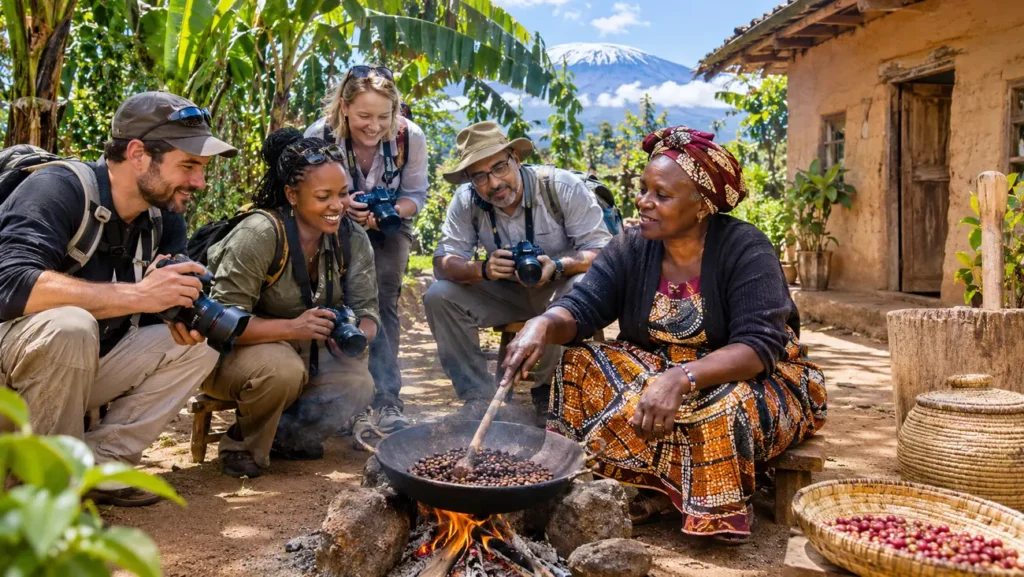
A total walking distance would only tell part of the story. A short stretch with steps or uneven ground may matter more to you than a longer walk on a firm, level surface. Standing time, the return journey and the chance to pause also deserve attention.
Use these questions to assess a proposed trip rather than assuming that a particular destination or safari description will suit your needs.
| Part of the trip | What to clarify | Why it matters |
|---|---|---|
| Planned walks | Duration, ground conditions, pace and return arrangements | Helps you judge the full activity, not just its name |
| Vehicle access | Entry height, steps, handholds and the boarding surface | Getting in and out is separate from walking distance |
| Accommodation | Routes between your room, meals and vehicle | Everyday journeys may happen several times |
| Activity meeting points | Distance from drop-off and any waiting on foot | The experience may involve movement before it starts |
| Breaks and stops | Seating, toilet access and opportunities to pause | A stop does not necessarily provide a seated rest |
| Optional activities | Whether you can decline and what happens instead | A suitable alternative needs confirmation |
Start with your comfortable walking level
Begin with what you can comfortably manage, not the destination checklist. Descriptions such as “fairly fit” or “limited mobility” leave room for different interpretations. Explain the conditions under which walking feels manageable and what makes it difficult.
You might be comfortable walking steadily but find prolonged standing uncomfortable. Alternatively, distance may be less important than steps, slopes or the need to carry a bag. These distinctions help turn a general enquiry into practical questions that someone can investigate.
Describe an ordinary, comfortable outing
Use a familiar example: the length of walk you usually enjoy, the surface you prefer and whether you need a seated break. State if that represents a comfortable routine rather than your maximum effort. You do not need to test your limits to provide useful information.
If your ability varies, explain that too. Planning around your best day alone may leave too little flexibility when you feel tired.
Shape the day around activities and everyday movement
Read a proposed day in two parts. First, identify any experience that explicitly involves walking. Then look for movement hidden between the main activities: reaching breakfast, boarding transport, finding a toilet or returning to your room.
This avoids the misleading conclusion that “no walking activity” means “no walking required”. Ask for a description of the whole day, including where you would wait and where you could rest.
Allow recovery time between demands
A manageable walk may feel different after repeated vehicle entry or a long period without a comfortable break. Ask whether the proposed timing allows recovery before the next activity. A gap on an itinerary is only useful if the place and arrangements allow you to rest.
For ideas about pacing, read why couples may prefer a slower Mikumi itinerary. Treat a slower schedule as a planning preference, not evidence that access requirements are met.
Choose the route with walking demands in mind
Compare routes by how they work for you, rather than simply counting destinations. Ask how often you would change accommodation, where activities begin and which days combine transfers with outings. Each change deserves an access check, even when the headline experience sounds similar.
Do not assume that a longer stay automatically resolves walking concerns. It may reduce packing and moving between properties, but the room-to-vehicle route still needs to be suitable for repeated use.
The discussion of route choices when travelling to Ruaha National Park offers another starting point for thinking about the journey as a whole. Any proposed transport connection should be checked against your individual requirements.
Before booking: check vehicles, rooms and meeting points
Ask about the actual arrangements proposed for your dates. General descriptions of a vehicle category or accommodation style are not enough to confirm access. Where a detail affects your decision, request specific information and, where helpful, current photographs.
Getting into and out of the vehicle
Clarify the entry height, number of steps, available handholds and likely boarding surface. Ask whether the same arrangement applies throughout the trip. Do not assume that equipment, physical assistance or an adapted vehicle will be available unless explicitly confirmed.
Moving around the accommodation
Check the route from the proposed room to meals, reception and the vehicle pick-up point. Ask about steps, slopes, surface changes and the return route after dark. A request for a conveniently positioned room is not the same as confirmation that one has been reserved.
When comparing stays, the principles in choosing accommodation around Mikumi can help frame questions about location. Your walking and access checks should still relate to the specific property and room proposed.
Reaching the start of an activity
Find out whether the vehicle stops at the meeting point or whether a walk comes first. Ask about queues, briefings and waiting areas as well as the activity itself. Confirm the return arrangement rather than assuming that drop-off and collection work identically.
Small details: surfaces, steps, standing and rest
Ask for descriptions rather than reassuring adjectives. “A short walk” does not explain whether the ground is firm, loose, sloping or broken by steps. Likewise, “easy access” may mean different things to different travellers.
Weather is another reason to ask conditional questions. Find out whether wet conditions could change the surface or the arrangements, and what would happen if a route became unsuitable. Avoid relying on a general seasonal description as a guarantee of conditions.
Useful packing questions
- What footwear is recommended for the activities actually included?
- Will you need to carry your own belongings between stops?
- Can any walking aid you use be transported and kept within reach?
- Where could you sit while waiting for an activity or transfer?
Discuss luggage handling separately from walking support. For related packing considerations, see Tanzania safari luggage: suitcases or soft bags? Neither a lighter bag nor a particular bag style resolves an access barrier.
A simple decision framework: requirements and preferences
Separate what must be confirmed from what would make the trip more enjoyable. Essential requirements might concern steps, boarding or the ability to sit during a wait. Preferences might include fewer room changes or more unstructured time.
This distinction helps when reviewing alternatives. A pleasant extra should not distract from an unresolved requirement, and a broad assurance should not replace an answer to a specific question.
- Essential: identify anything that would prevent you from taking part safely or comfortably.
- Preferred: describe arrangements that would improve your experience.
- Unconfirmed: keep unanswered details visible until they are resolved.
If an essential point cannot be confirmed, do not treat it as settled. Ask whether the proposal can change before committing.
The guide’s role: agree how to communicate discomfort
Before an activity, explain how you would prefer to communicate tiredness, discomfort or a need to stop. Raising a concern early gives everyone clearer information than waiting until continuing becomes difficult. Agreeing a simple phrase can be helpful if you prefer a discreet conversation.
Ask what flexibility is possible and where it is limited by safety, permissions or the activity arrangements. A guide should not be expected to create an unplanned alternative or provide physical assistance that has not been agreed.
For any proposed walk, clarify what happens if you decide not to begin or cannot comfortably continue. Never assume you can leave a guided activity independently or wait alone somewhere.
Keep expectations consistent across a wider Tanzania journey
Apply the same checks to every part of a multi-stop trip. A city visit, cultural experience or transfer stop deserves attention alongside the main safari activities. Different arrangements may apply at each location.
Keep a short written summary of your requirements with the proposed itinerary. Recheck it when a vehicle, property, room or activity changes. Confirmation for one part of the journey should not be carried over to another without checking.
Questions travellers often ask
Can I choose a safari without planned walks?
Ask whether the specific proposal can exclude walking activities and what alternatives, if any, are available. You will still need to clarify everyday movement and vehicle access. No planned walks does not mean a step-free trip.
Is there a standard daily walking distance?
No single figure can be established from a safari label or destination name. Request details for your proposed arrangements, including repeated journeys around accommodation and movement at stops.
Does a private itinerary guarantee flexibility?
Do not assume that it does. Ask which timings and activities can change, what restrictions apply and whether any adjustment affects the booking terms or cost.
What should I include in my first enquiry?
- Your comfortable walking duration and preferred surfaces.
- Any difficulty with steps, slopes, standing or vehicle entry.
- Your need for seated breaks and recovery time.
- Any walking aid or equipment you expect to bring.
- The specific details you need confirmed before booking.
When contacting Pillars of Africa Safaris, share this information alongside your travel interests. Ask for confirmation against the proposed itinerary, vehicles and accommodation rather than a general promise of suitability. Clear questions at the outset give you a stronger basis for choosing a trip that matches your needs.
TopicTanzania Safari Planning
Reader focusInformational: understand which parts of a Tanzania safari may involve walking and what to clarify before choosing a trip.
Main subjectwalking on Tanzania safaris